Autoimmune Disease and Fitness: Taking Back Control of Your Body

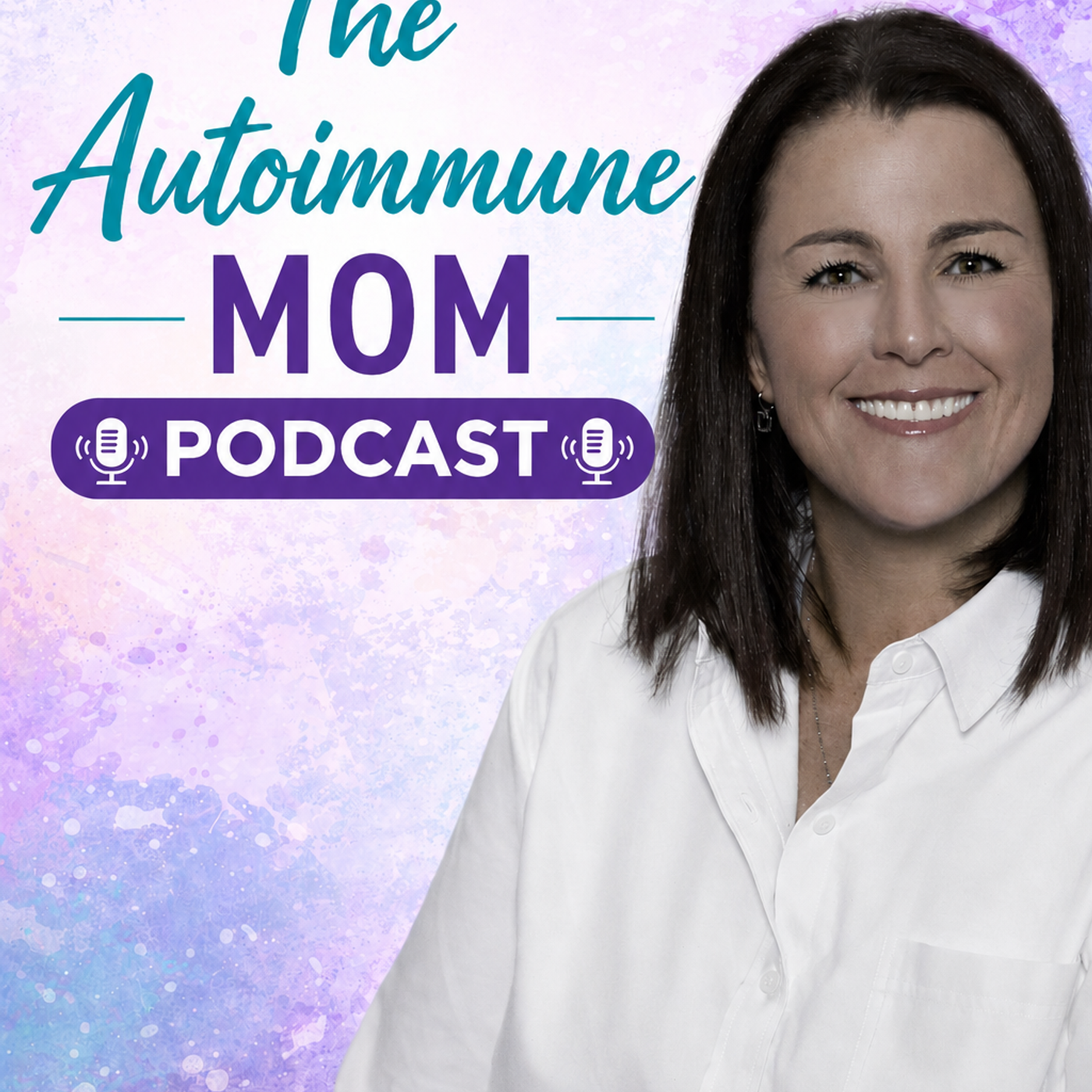


What happens when your body feels out of control, and how do you parent through it? In this episode of the Autoimmune Mom Podcast, host Ali sits down with Jessica Griffin, a fitness and nutrition coach and mom of three, known on Instagram as NJFitMom. Jessica has lived with ulcerative colitis and Crohn's disease since she was 14.Jessica shares her story:
- The early days: hiding her symptoms from her parents and doctor as a teenager, then a hospital stay, steroids and big changes to her body.
- Finding agency: how food, movement and strength training gave her back a sense of control, and why she now says "meet yourself where you're at."
- Pregnancy and parenting: going through high-risk pregnancies on immune-suppressing treatment, raising kids through flares, and the worry about whether it affected them.
- A new flare: her first in about five years, how she handles the fear spiral, and the lesson that "this too shall pass."
- Midlife and change: menopause, kids leaving for college, and finding joy in trying new things.
Ali and Jessica also talk about why food and exercise advice has to be personal, and why autoimmune disease is so often invisible.
Key takeaway:You're not a bad mom, and you don't have to be a super mom. As Jessica's dad used to say, "lead with love."
Find Jessica:Instagram @NJFitMom. She offers virtual one-on-one coaching and a midlife membership community.Want a shorter version (about 2–3 sentences) for platforms with tighter limits, or a different tone? I haven't published or changed anything.
Jessica Griffin: Is is just to to not beat up on yourself, to not think you're a bad mom. To not it's just I think as moms, we all wanna be super moms and we have these capes that we're wearing and everything has to be right and and perfect and that you can still be a really good mom and not able to be a hundred percent failing a hundred percent all the time or do all the things like you said on the sign up genius or be the one doing the stuff. my dad had a saying, lead with love. He always said, just no matter what in life, just if you don't know what to do, like lead with love It it's like treating the whole person. Right. I mean, that's
Ali: Yeah.
Jessica Griffin: what I loved about my doctor that I had for so many years, who's a doctor who really just treated the whole person. I think it's the same thing when you approach fitness and exercise. You can't take a guide, you can't take something you pluck off from an influencer. You really gotta
Ali: Mm.
Jessica Griffin: understand the background, the history, the medical, what people have done before, what their mindset is like around like, you know, I came from a very interesting mindset with food and eating because of my autoimmune, right? So it's like
Ali: Mm-hmm.
Jessica Griffin: with that you've gotta have some some things that are just way more than follow a plan and count your protein and eat your eat your this.
Ali: my gosh, if one more person tells me to eat protein, I'm gonna lose my freaking mind. The message is received.
Jessica Griffin: Right. I have a post actually coming up on that soon. I have a post coming up on that soon. I just have my mom, she's like 80 years old, she's like calling me like, mom so confused about protein. I'm like, don't listen to people. Just have a conversation with me. Because it's
Ali: my god.
Jessica Griffin: it's individual, you know. I will say
Ali: For sure.
Jessica Griffin: though, I think it's so important for women with autoimmune okay, for all women regardless, but to really do some studying and and and and educating themselves and figuring out food, nutrition. And it it is different for everybody, but there are some basic things and what we eat really can play such a role in the inflammation
Ali: For sure.
Jessica Griffin: in our body and in our symptoms. And you know, I some young kids that that have my disease that the parents will send to me and I'm like the They're not gonna do any of this right now. They're just not ready. They're living their
Ali: Yeah.
Jessica Griffin: life and they're they're gonna keep flaring and but just you know, there's there's supplements, there's there's protocol, you know, there's things that and you've gotta try error and figure out what works for you, but to not ignore that piece. You know,
Ali: I agree.
Jessica Griffin: we can still do it all right and we can still end up with a flare, but that doesn't mean to ignore that piece because I think I know for me it's why I've had such long good drug free runs because of these other pieces that I'm doing. Yeah.
Ali: things that you're doing for sure. Welcome back, everybody, to the Autoimmune Mom Podcast. Today I have a fellow Northeastern woman, mom, influencer out there that is here to share her story. Her name is Jessica Griffin with her tags at social media is NJFitMom. And she's got a great story for us today. I'm super excited. I love her messages on Instagram. they're a mixed bag of a lot of different things, but she often talks about her chronic illness stuff. And that's what we're here to talk about today. So Jessica, welcome to the show. Thank you for being here.
Jessica Griffin: Hi, Ali. Thank you. Thanks for having me.
Ali: it's my pleasure. how's the weather?
Jessica Griffin: It's terrible. I actually had to turn the heat on today for the first day. Closed the pool
Ali: It's o wait.
Jessica Griffin: yesterday, turned the heat on today. I was like, I'm done. Just I'm done.
Ali: man, I know. I'm sorry. My family is doing the they're all up still in the Boston area, so they have soccer games outside in this weather and they're miserable too. So
Jessica Griffin: Yeah.
Ali: I I understand. I of course have to just throw a little jab at you there, but okay. Exactly, exactly.
Jessica Griffin: The time of darkened despair.
Ali: But you know, there's a lesson in that too, especially with a chronic illness. There are times when we go through the dark and the hard and the cold and the damp, and then there are times that are filled with light and sunshine. So let's
Jessica Griffin: Yes, spring will come.
Ali: talk about who you were prior to your diagnosis leading up to it, what that all looked like, what you were diagnosed with, and yeah, let's start with that.
Jessica Griffin: So I was an average teen. I was in my freshman, sophomore year of high school. My symptoms really started freshman year, but got exacerbated my sophomore year and I was at a place my diagnosis is first was ulcer ulcerative colitis, then it was Crohn's disease, then it was, hey, we think you have both. but at the time I didn't know what it was. I just knew I was fourteen and I just kept having to run to the bathroom and there was blood in the toilet every time I would I would go to the bathroom. And I knew it was I knew it was coming from my intestines. and I was scared to death. It started with a few drops and by the time I finally got diagnosed, Think my hemoglobin was down to a six. I had people coming in to donate blood. I was hospitalized. it really it came to a head, you know. And of course, when you're losing blood and you are having something where your food isn't getting absorbed and everything is going right through you, your energy is going and you're exhausted. And I was just trying to battle through and do the normal high school stuff, be on the cheerleading team, do softball, like just keep like normal. I'm normal, I'm normal. Everything is fine. I was so embarrassed. to share that with my parents. And I also had this feeling that I had some rare cancer and I was just gonna die. And I didn't want I didn't want to worry everybody. I was like, I'm just gonna see this through or pretend it's not happening and maybe it'll go away. So
Ali: Yeah. So did you not tell your parents for a while? wow, yeah. I was gonna ask that. Yeah.
Jessica Griffin: No, I did not tell them for a while. It took I I lied to a doctor straight to his face. It took till I came home. I fainted on my way coming up the stairs. I couldn't make it up the stairs. My mother said, We've got to do something. Took me to the primary, asked me all these questions. They do my labs, they see how low my blood is, and he point blank says to me, Are you seeing any bleeding when you go to bat to the bathroom? And I looked right at him and I said, No, not at all. Because for some reason at fourteen, fifteen years old, that I I don't know that admitting that was just was too much. Even as scared as yeah, it's crazy.
Ali: It was self preservation, more than likely,
Jessica Griffin: And my my I I I have three daughters. They all know this story. It has been shared. Like let's all
Ali: Yeah.
Jessica Griffin: learn from my mistakes. and then I came home that night and I just had a breakdown in my room and I said to my mom, I lied, I've been lying to everybody. I don't know what to do. It won't
Ali: my gosh.
Jessica Griffin: stop. I'm scared. And and then I was quiet.
Ali: So much for a fourteen year old to hold on her own. And
Jessica Griffin: Yeah.
Ali: that is that goes to show you how much our teens, preteens, teens want to fit in, how they just want to be a part of the crowd and not different or special or whatever. Yeah, they just wanna be this. So I I can't
Jessica Griffin: Yeah.
Ali: imagine how hard that was for you and how lonely that must have been.
Jessica Griffin: Yes. And what will people think? And this isn't like stuff you talk about. This is bowel movements and growth. It's growth. It's poop. It's grow.
Ali: And it's kinda gross. It's not like yeah, yeah.
Jessica Griffin: it's it's not it's not yeah. It's not it's not
Ali: Sexy by any stretch. Yeah.
Jessica Griffin: sexy. And now at fifty one years old, I'm like, You wanna sit down? We can talk we can talk school, we can talk consistency,
Ali: Yeah.
Jessica Griffin: we can talk amount of time today, like, let's chat it out.
Ali: Well, quickly, what is the difference between all sorts of colitis and Crohn's?
Jessica Griffin: So it it really depends on who who you talk to, and there's so
Ali: Okay.
Jessica Griffin: many nuances with with both of them. ulcerative colitis tends to be for some people more lower part of your intestine. sigmoid, so you're going a lot more, you get you tend to get that rectal bleeding. Crohn's is often more in your small intestines. it's upper, you have more of the where you you can't eat as much. So both are mal malnourishments. But with usually with Crohn, you're not like
Ali: You can't absorb as much.
Jessica Griffin: running to the bathroom twenty different times a day. But again, it's so different
Ali: Okay. Yeah.
Jessica Griffin: for so many people.
Ali: And you were having both.
Jessica Griffin: Yeah, and treatment is basically the same, at this point. When I got it, 14, that was in the early nineties, I guess. I mean, we're going back over 30 years of having this, it it looked very different then.
Ali: Yes.
Jessica Griffin: and so yes, I had one little thing they saw on a scan at one point that switched it to Crohn's, and then my doctor, who I switched to at in my early twenties. always had this opinion of I don't believe that other doctor what she saw. I don't think that was on the scan. I always he always characterized me as more of UC, but the diagnosis on paper was always Crohn's. So I always just say U C slash Crohn's.
Ali: Yeah. I often think that the title doesn't really matter. It's
Jessica Griffin: Exactly.
Ali: the the treatments like there's not you have rheumatoid, you sh this is the one medication and treatment path that's gonna help you. It's not like that. So
Jessica Griffin: Exactly.
Ali: it matters, but
Jessica Griffin: And with all other autoimmunes, exactly that. You can have somebody else who has fibromyalgia, someone else has rheumatoid and their their the way it presents and the way it flares and and it just it's so different. We're just all so,
Ali: So different.
Jessica Griffin: you know, unique.
Ali: Mm-hmm. So when you were finally admitted to your parents and diagnosed and treatments, how did that early stages of of it look?
Jessica Griffin: I was in the hospital for a good long time. I was on homeside. They took me out of high school, homeside tutors, massive amounts of intravenous steroids, lots of drugs thrown at me. I went from a tiny petite, like I said, the cheerlitter of the flyer on top to
Ali: Yeah.
Jessica Griffin: 30 pounds steroids, stretch marks, moon face, within a couple of months. Which also was a very difficult thing going from a size extra small to a size extra large in a matter of months when you're f you know, fourteen, fifteen years old.
Ali: It's h it's hard at forty seven. and I've done it a hundred times both ways.
Jessica Griffin: Yeah, e exactly.
Ali: Gone up and down and up and down and it's still it's not any easier. So I can't even imagine with at that age.
Jessica Griffin: Yes. And then you get into the whole eat this, don't eat this, this will make it flare, this will happen. So then there was this immediate fear of food and eating. And well, what if I eat this? And is this gonna set a flare off? And is this a safe food and is this okay? And then that I feel like at that age with body image and things changing. We're already teens are dealing with so much of that and then add on a bowel disease where you're like, is this gonna put me in the hospital? And now I'm back on bedside tutors. it was a lot.
Ali: Yeah. Yeah, well that sounds like a lot. And were you able to go to college? what did how did that what happened after high school?
Jessica Griffin: Yes, I did. I had just many hospitalizations in and out through high school, on, off, you know, go on the medication, you're good, go on, you know, the the routine at
Ali: Yeah, mm-hmm.
Jessica Griffin: the t at the time. and then college was similar, a lot of waxing and weaning. I left college at one point. I had to go home and take exams at home. so it was a good like decade and a half of really not having a great hands on it. I left grad school after a semester, how to come home. it just it was a very long path. And it's really what brought me to the work that I do now, which is nutrition,
Ali: Yes.
Jessica Griffin: fitness, exercise. Because what finally happened was like in my early 20s, I was like, I just I can't do this anymore. Like I'm doing everything they say. I'm following the protocol. I'm doing the things and yet I'm still sitting here as a victim waiting for the for the shoe to drop.
Ali: Right.
Jessica Griffin: and the medicines kept getting stronger and you know, immunosuppressants and and biologics and infusions, and I just felt very like I had no control or power over my body or my illness.
Ali: Mm-hmm.
Jessica Griffin: and kind of turning to let me see how I can figure this out. Let me do research. Let me look at, you know, anti-inflammation. Let me look at diet. Let me look at exercise. Like it will it gave me this sense of control of
Ali: control.
Jessica Griffin: something that I could kind of be in control of where like everything else in my body fell out of control. But if I
Ali: Mm-hmm.
Jessica Griffin: could maybe figure this out, I could have some agency over the disease.
Ali: love that. And you wrote this on your Instagram post, if you don't mind, I'm gonna read it here. And it's it's wrap up what you said. You said it was exhausting. I lived most of my days in fear and stress from the autoimmune disease. And many times I felt like there was no way out, we were just going this was just gonna be my life. And I eventually turned to fitness and nutrition because I got my wits I got to my wits end of living as a victim to this disease. And I felt like a piece I could control in my body w that felt totally unpredictable. Once I realized the impact I had on my symptoms and quality of life, they became my lifeline. And I became a batshit crazy person about it. Every time I I went from feeling totally disempowered to feeling back in the driver's seat of my life and eventually symptom free. This is why I do the work I do. And I just love that because that sums up life with lot like if you've had a lot an autoimmune disease for a long time, you can relate to everything you just, whether it's fitness, fill in the blank of what you just did, what you just said there, but loss of control. Very s fear based, very stress stress based. It's just and it is it is a journey to get out of that. You have to like take the time to grieve and process and actually just feel a little tiny sliver better so that you can find what the motivating factor is to choose a better or a different path. And I just think that that's amazing. I love that you said that.
Jessica Griffin: Thank you. Thank you so much.
Ali: Yeah. So you started work you started your nutrition stuff in your twenties?
Jessica Griffin: Yes, it was about in my twenties. I started with this one book called The Blah Blah Blah Diet that was supposed to help with all sorts of clitosynchrones. And at the time, my mother and I would grind almonds ourselves to make almond meal because there was no
Ali: Mm-hmm.
Jessica Griffin: almond meal out on the market. So we would buy the almonds, we'd grind it up. We were making our own yogurt from scratch. You'd start with a little bit of mil. I mean, it was insane. We bought the thing, we'd, you know, have to heat it to a certain amount of degrees. So that started with that craziness, just all in an effort to figure out how to eat and survive in a way that
Ali: Yeah.
Jessica Griffin: that wouldn't you know send my intestines and and my disease into a flare. So yes that started it. and then you know it go on the medications, go on the high steroids, gain weight, then get really sick, lose weight. Now you're too you're too, you know, you're you're you're too light. You need to gain weight. Like it's so much I've trying to figure it out. And then exercise really just came Because I was just mentally. Like it's you know, it started with like just like walking and then when I would start to get my strength back because I would go on these massive dose of autoimmune suppressants and steroids and I mean at one point I couldn't like the I said I couldn't walk up the stairs when my mom finally took the doc took me the doctor, but also I remember at a time in grad school when I came home, by the time I came home I couldn't physically walk upstairs without holding myself up. on the banister and pull and now and if you know me now and you see me doing pull ups and all these other things,
Ali: Yeah.
Jessica Griffin: it's hard to imagine, but I physically was so shaky and my muscles had atropied so much from the medication.
Ali: Yeah.
Jessica Griffin: I was losing my hair, my muscles was atropy. So it kind of became this thing just trying to start with walking, start with lightweight, like try to get my strength back from when I would kind of get smashed with the medicine. And then I realized it was helping me with the, you know, the moods, the feeling the sadness, the anxiety, the stress that it also was a huge help in that.
Ali: Amazing. I can relate to the not being I I went from running marathons to not being able to walk up my sister's driveway at at Easter, a short t months later. it's wild how fast things can change. Yes.
Jessica Griffin: how fast it can happen and you f feel but I don't know what the word is. Maybe shame isn't the right word. Like a failure. You feel like a failure. Like wait, I
Ali: Yeah. Well you feel like w you sometimes you feel like I did this to myself because I didn't I didn't do this or I did this or I ate that and I shouldn't have and like I did if I didn't
Jessica Griffin: Yes, if I didn't eat Yeah.
Ali: do this and it you know this is really all my fault and that is just a vicious negative place to be
Jessica Griffin: Yes.
Ali: but hard not to find yourself in it at some point or another over the years. Yeah. Of course.
Jessica Griffin: Right, right, especially as women, because we love to blame ourselves for things, right? that's what we do.
Ali: Let's talk about something else we can blame ourselves for, but parenting and motherhood and how did you manage all of this now when you introduced children into this? Because obviously you had it for quite so many years before. And
Jessica Griffin: Yes.
Ali: so let's talk a little bit about that.
Jessica Griffin: Yeah, so my first pregnancy was excellent. I had a get I had a get off everything. I got off everything. I was like in the best shape of my life as far as my disease. My doctor was like so happy, had a great pregnancy. Everything flowed. And I remember he was like, Great, like if you're gonna have another, like strike while they air and tie, like you're off your stuff,
Ali: Yeah.
Jessica Griffin: let's go. So I had my second daughter very close. They're 17 and a half months apart. Completely different ball game. Ended up in the hospital at five months. getting, different infusions, shampoo iron, all the things that, kept coming. I have so many ultrasounds of her because I was there for so long and the the joke was the baby's great. The baby is growing.
Ali: Yeah.
Jessica Griffin: The baby is awesome. you are withering away. you are she's taking everything she needs from you. Yeah.
Ali: Yeah. Well, I would imagine yes, the the baby was taking every but what little you were able to absorb nutrient wise, the baby was probably reaping the benefits.
Jessica Griffin: Right. She was great.
Ali: Yeah.
Jessica Griffin: She was great. Yep. so that was a road and a half. they had to have some treatments passed at that time. They'd never been used on a pregnant woman in New Jersey. That was the whole thing. it was just crazy. And then my third daughter came many years later, took us many, many more years of of trying, even though my doctor I love to tell the story, said to me after I had my second If you get pregnant again, I will not be your doctor. So we've been together since I was 20. Now I'm in my early
Ali: Ha ha ha
Jessica Griffin: 30s. He's like, that's it. So he's like, please don't do it again. It was too, he's like, it was too stressful for me to be
Ali: Yeah.
Jessica Griffin: sitting there doing it with you. but I've never been one to like listen or take no for an answer and always felt we were supposed to have a third. So that's what we did. And so seven years later, my third came and it was a similar to my second, not as bad with my disease, but really struggled my way through it for sure. as
Ali: situation. Yeah. But all three were born healthy and yeah.
Jessica Griffin: All three, born born healthy, normal, ten fingers, ten toes, all the things.
Ali: Ha ha
Jessica Griffin: Yeah. My first actually the one that I did not have any issues with was four weeks early. but other than that.
Ali: I I ask that question because often people wonder, I don't want to have children because I what am I going to do about treatments? How's it going affect the babies? and so I think sharing
Jessica Griffin: Yeah.
Ali: stories like you and my kids are thirteen and fourteen, they're fourteen and a half months apart. But we have children that have got some years into their life and they're fine. And we took medications and treatments and did what we had to do
Jessica Griffin: Yes.
Ali: to get through it, and they're fine. So I think it's important to share those kind of stories. Because I
Jessica Griffin: Yeah.
Ali: it's scary.
Jessica Griffin: It's scary. And I remember sitting there when with my second, really having to make a decision. And there really wasn't a decision basically to make, but but the fear of like, well, if I do this, can this affect her later on? And I think it's like everything else you have to just kind of make the best decision you can at the time with the information
Ali: Mm-hmm.
Jessica Griffin: you have at the time. And then we hope and pray for the best. Now two of my three daughters have some auto. immune stuff. not similar to Crohn's or Clitus at all. but they struck truck my one has grown out of it, my w other one is still in it. And I do often go to the back of my head like, I wonder if
Ali: Mm-hmm.
Jessica Griffin: it's because I was I had to take some immune suppressing drugs when I was pregnant in order to h keep the healthy pregnancy. And, you know, is is it my fault? But the alternative is they're not here, right? And they're not living their life and
Ali: sometimes think those they're not here. Right. Yeah.
Jessica Griffin: and and they're not impacting this world. So it's just I I try to down
Ali: And often I think my mother didn't take autoimmune suppressing drugs when she had me, and and I have an autoimmune disease, and my sisters have other autoimmune diseases. And like it's just so the it's not the pole, it's not the whole picture. It it you
Jessica Griffin: Exactly.
Ali: know, it's you can't there's not one defining factor as to why somebody gets a chronic illness and somebody doesn't. There's a myriad of things.
Jessica Griffin: No, no. Exactly.
Ali: so how did you manage flare ups when you had young children at home.
Jessica Griffin: So yeah, my flare-ups, you know, by the time I had my my first two, I was in my early thirties, they really were few and farther between. but there were definitely times I ended up in the hospital. and it just really there's nothing worse than like being in the hospital and having an IV in your arm and like having your little two year old like coming up and crawling on the bed with you. You just feel like such a loser. and this is not right and you don't
Ali: This is not this is not the life I planned. Yeah. Yeah.
Jessica Griffin: want them to be scared or worried or you know, and it's really hard to navigate because as you know as a mom, like the rest of the world keeps going and our duties
Ali: Yeah.
Jessica Griffin: keep going. And it's like we've got to kind of like right now I have started a flare just about a month ago. Which is the first player I've had in probably almost four to five years. I've had a really solid run. So this came out of nowhere. And now I was just saying to my husband, like, I forget how hard like, my gosh, like I still have to run my business and do my stuff and I'm fighting with insurance and I'm on the phone here. And I forget what a full-time job this becomes while I'm also trying to get my seventh grader doing her stuff, help my one in college doing figure this out. it's hard, you know, and it's always just
Ali: It is.
Jessica Griffin: been I've just always been really open with it, Mom's got this, you know, illness and it's with her intestines and sometimes it acts up and that's what we gotta do. Yeah. Yeah.
Ali: We have to deal with it. Yeah. But I also loved one, you made a post recently about evolution and how growing you all in order to evolve, it's it always comes with a some kind of a hardship or a struggle or something that you didn't plan. And you didn't plan this flare. But maybe in like two years down the line you can see what you grew up got out of it and how you evolved because of it. that's how I try to focus on. I'm flaring myself right now and I'm like What have I not learned in the all the lessons of everything?
Jessica Griffin: What did I do? Yeah, yeah.
Ali: What what is the lesson in this one? How how do I need to evolve out of this one?
Jessica Griffin: Yes. Yes. It's a I think what I said in the post was like every it starts with a shake up, right? It's o
Ali: Yes.
Jessica Griffin: there's always some shakeup and then that's where then the evolution comes and what do we learn and what do we grow and yeah, for sure. And I it's like you can only what'd you say? No.
Ali: I I think it's a good focus. Go ahead. Sorry. I interrupted you. Go ahead.
Jessica Griffin: No, go ahead.
Ali: I think it's good to have that focus when you're going through the shakeup of okay, like I understand this is hard, and I'm not diminishing anyone when you're in a when you're in a flare, it's terrible, and you have emotions tied to that. But if you can take a second and say, okay, this is gonna, I'm gonna grow through this as I go through this. it's a good focus out of the negative that we are living in at the time.
Jessica Griffin: Yes, because I know for me it can be so easy to spiral with and I was actually just having this spiral in this conversation with a close friend of mine and my husband like Like I'm here. I haven't been here in so many years. Am I going back? Are we gonna go right back to where it was? Is it gonna go like that downhill where I'm totally feeling this and that like it you can really get caught in in the fear. Of like, God, please, I thought I kicked, I thought I was at this level and now I'm here. And trying to then remind myself, wait, you've been through flares before. You've been through way worse flares before. I remind myself, wait, you
Ali: Yeah.
Jessica Griffin: battled, you've been in the hospital pregnant. Like, this
Ali: Yes.
Jessica Griffin: too shall pass. Just for and that and that's the nature of autoimmune, is, and that's why it sucks so bad. Because it's
Ali: Yeah.
Jessica Griffin: like everything you're going along and you're doing all the things, and then you get hit and you're like, What I was doing all the things? Like, I
Ali: Yeah.
Jessica Griffin: and you feel like shoot
Ali: Right.
Jessica Griffin: you start to you know, that's where you feel that again loss of power and then coming back to the place of what can I control? What can I do? You know, how can I
Ali: And do you give yourself some time to sit in that spiral or do you try to like mental warrior your way out of it immediately? Like you are you good at recognizing it right away?
Jessica Griffin: yeah, well, like I said, it's been several years, so this is pretty new dealing with this at fifty one. And I go to that place of
Ali: No it yeah.
Jessica Griffin: like, well, is this like I've been in menopause for several years. Is this a hormonal thing
Ali: Mm-hmm.
Jessica Griffin: now? And is this my is this my like menopause chapter with this autoimmune disease? You know, like but yes, I do believe that I I know enough now that I know I'm spiraling. I can kinda, you know, cry
Ali: See it.
Jessica Griffin: the words and fears to people that I'm close to, and then but we gotta get to work. We gotta do the stuff. What's the next best step? How do I do this? because I mean you nothing good comes from you know, it's always like autoimmune,
Ali: No.
Jessica Griffin: like, yeah, well do try not to stress, right? Like keep your str keep your stress level low. That just exacerbates it.
Ali: I know, seriously. They tell you try not to stress, but then you have to have a conversation with the insurance company and you're like
Jessica Griffin: portal for the fifth time with the doctor
Ali: Mm-hmm.
Jessica Griffin: like can somebody answer my
Ali: I actually have to send a doc my doctor an email and I should I could call, but I actually want it documented what I have to say. And I find it's better to do that. I've learned because if I call the doctor and I leave a message, it gets to the nurse and then it gets telephoned down to whoever. And I don't know that the whole story gets so I've learned to email the doctor, but even that I don't want to do because my wrist hurts and typing is hard and I'm like procrastinating and I find myself spiraling quickly off for stupid little things like the the doctor and insurance and all of that. but what I like what you said was you found people that you can t you you have your husband and your friend who you can go to and dump this all on. And that is huge. They not dump it all on, but l you know, share it with. Cause if you do not have that, if you do not have even one person that you can call and just verbal diarrhea on top of them about whatever you're going through. It is very, very difficult. And I think a lot of people in this community that I'm building here, I hear that a lot. My husband doesn't understand. My kids don't get it. They think I'm faking. and I that is so difficult. And part of the reason why I'm doing these podcasts is to share stories like yours so people can hear them and not feel that way or have some place to go. And and your page is great place for that too because you're living life. You're doing your your work your nutrition, fitness, you're sharing your autoimmune stuff and your mom at the same time. It's like such a relatable place. I love it.
Jessica Griffin: Yeah, and I just feel like the more we share and tell our stories, the more people see themselves in us and we see ourselves in them, right? we're all here. We're all we're all I always say, I always say I I say often in my thing, like, we're all in this together. Like right, we're
Ali: Yes, yes.
Jessica Griffin: trying to do it. And so if people don't have that, they have a place and a person like you and your page or somewhere they can go and be like, Okay, okay, yeah, so relate to what Jess
Ali: Exactly.
Jessica Griffin: Said so I feel a little less alone in this whole thing.
Ali: I agree. I'm trying to I'm just looking at my notes here a little bit. Sometimes I I edit all this crap out so we don't have to be perfect the whole time. all right, so let's talk a little bit.
Jessica Griffin: Yeah. Yeah, I get you. I getcha. And we find I was just gonna say I find the same stuff with with menopause and being fifty one and just being open and talking about what's going on because I think a lot of women feel isolated in this next chapter,
Ali: Mm-hmm.
Jessica Griffin: just like they feel isolated with autoimmune. You're like, What's happening? My body, I don't know what's going on. Now you've got women who've never dealt with that, never dealt with
Ali: Yes.
Jessica Griffin: anything like that. They hit this perimenopause menopause and it's like, What's happening with my body? I thought I knew my body. Why is this happening? I don't have answers, I don't know what to do, right? It's very isolating.
Ali: It is very isolating. Even I and I I was thinking the other day, did our mothers just not I don't remember my mother really complaining about or talk they didn't have social media. I don't remember hearing stories about perimenopause was it just never menopause, perimenopause. They just never talked about it. They just grinned and bear it. that makes sense for my Irish Catholic upbringing. You just grin and bear it. But
Jessica Griffin: Yeah.
Ali: it's almost like it w people are just starting to talk about it. And It's not fun.
Jessica Griffin: No, it it and I I I I think the same thing about and I remember my mom I asked my mom that and she's like, I don't know, I do I did go on some hormone and mom's gonna be eighty in November, so she's, you know, going back and remembering but she's like, I think it was I mean it was on some hormones for some time, but it wasn't really like she didn't remember it being being much. And maybe maybe it wasn't,
Ali: Hm.
Jessica Griffin: or maybe it was the Catholic in her where it's like you just
Ali: Yeah.
Jessica Griffin: she's the oldest daughter, you're the c you just you're used to just grinning and bearing it. We don't talk about stuff. I don't know.
Ali: You grin and bear it, exactly. Offer it up to God, it'll be fine. Exactly.
Jessica Griffin: Yeah. God willing. God willing.
Ali: but that's it. I also wonder if there's environmental issues that we women are dealing with that our mothers did not. My mother is 72-ish.
Jessica Griffin: Percent.
Ali: so I think there's you know, we have all of the things, we have the
Jessica Griffin: are I agree.
Ali: EMFs and the toxins and the everything in the system and It's so affecting of our hormones. We know that. We know that from a young age. Even your laundry detergent can have an effect on your teenage daughters. we this stuff is well documented. And
Jessica Griffin: Mm-hmm.
Ali: of course, I I never thought about it for how it affects us into perimenopause, menopause, but it's gotta. It's all hormonal.
Jessica Griffin: I I absolutely believe that. And also our food system. Our food system
Ali: Mm-hmm.
Jessica Griffin: is totally different than it was 30 years ago, right? It's not the same. It's we're we're getting things in our foods that we weren't getting before. An apple today is not the same nutrients as an apple back then. And so the whole food system is messed up. Right. And so
Ali: Now you can't even be sure about the meats you buy. It's like you
Jessica Griffin: of course it's gonna have, you know, effects on on our hormones and yeah.
Ali: And hor yeah. Which is another
Jessica Griffin: I think so. It's a different world.
Ali: stress on the body, which is awes awesome for your autoimmune disease. So yeah, it's all shits and giggles over here.
Jessica Griffin: It's all connected. Yeah. Unicorns and rainbows.
Ali: here's a quick a couple of quick little questions for you. What
Jessica Griffin: Okay.
Ali: do you think people often get wrong about autoimmune disease, the ones that you're living with? What do they not see? What are they what are they assuming and that might not be true?
Jessica Griffin: That's a good question. I'm not
Ali: Mm.
Jessica Griffin: I'm not sure I have a good I'm not sure I have a good answer for it. I think there well
Ali: Okay, we can move on and I can choose another one.
Jessica Griffin: no I mean think for some there are like you were saying, she's exaggerating, she's she's faking, you know, like
Ali: Mm-hmm.
Jessica Griffin: it's just that that's it's what's the word I'm looking for? Psychosomatic.
Ali: Yes.
Jessica Griffin: I think that could that definitely could be something. I also think For me, I always consider Crohn's colitis like an invisible disease 'cause sometimes you can't see it on the outside, but whoa boy, if you could see my intestines and and so it's like people say, like, You look so good, you look so
Ali: Yeah. Well you look beautiful right now. Yeah.
Jessica Griffin: great You know, like I would walk in and my doctor, like, I don't understand how you're walking around with a hemoglobin this low and your white blood count is this high and so you can't a lot of times see it on the outside.
Ali: Well, yeah, people judge a book by its cover all the time. And it's not like we any anyone I no one I know living with an autoimmune disease wants to walk around with a sign on their forehead that says, I know I look okay, but I feel like shit, or but that's
Jessica Griffin: Yeah.
Ali: literally the life that we live. And there's been times recently where I'm like, I just can't do it. I can't sign up for the sign up genius genius and make sure there's baked brownies at the sale. I just I can't do it. And and no one can see that and I don't wanna go out and explain it to everybody, but I just can't do it and I have to just be okay with it. there's nothing else that I can do.
Jessica Griffin: Yes, yes, that that ability to give yourself the space to back off and pull away when you need to. And I think that that's hard. Because right, we don't want to like look like a slacker. I'm not doing it, but
Ali: Mm-hmm.
Jessica Griffin: you're like, I just can't do one more one more thing right now.
Ali: I don't have the capacity. So when you have a you're having a flare right now, does that affect how you your workouts look? Have you had to change them?
Jessica Griffin: Yes,
Ali: Yes. Yeah.
Jessica Griffin: yes, it has. It definitely weakens me. I get out of breath easier. it's just my strength goes because I'm not absorbing things and
Ali: Mm-hmm.
Jessica Griffin: you know, I know just different things in my body. So yeah, I I have definitely noticed it. I hopped on the pull up bar today and I was like, Well, I feel like I'm just like
Ali: Struggle, said he.
Jessica Griffin: struggulling. I can just feel the difference. I also don't sleep as well when I'm flaring because I'm up a lot with with the flares. So of course no sleep affects things. But yeah, and it's that ability to then not beat myself up about, you know, or not try to just push through and do what I usually do and be like, it's okay. Today you're gonna just do some lightweights and do a walk. And if you don't crush it today, don't crush it. trying to meet ourselves where we're at. That's something I definitely struggle with. but it's also
Ali: Well, especially in the business you're in, because it's all about the gains. Everybody's like, the gains, the gains. And if you're having
Jessica Griffin: It's true, it's true.
Ali: to take a break and you're doing what you can in the season you're in, and you're losing some of your gains, I can imagine that that would be very difficult mentally.
Jessica Griffin: Yeah, and I think it's just you put yourself at a level, like you said, I used to run marathons and now I can't. So it's like, well wait this you know, I should be able to do this. It's frustrating when when then you
Ali: Very frustrating.
Jessica Griffin: can't and it's not because I slacked off or I changed anything. It's just, you know, my body is under it's under attack right now. It's yeah.
Ali: Mm-hmm. And it doesn't need any more. I say that a lot too because I was such a an athlete. I was a scholarship athlete. I played basketball. I did run I it was who I was really. And then you know, I I did work out and I did run a half a marathon after diagnosis, but that was a really bad idea. It's just too stressful for my body and too hard and I've got too much joint damage and blah blah blah blah blah. But I had to reinvent myself several different times. Once when I was healthy and just graduated college and was no longer an athlete for the first time in my life. Again when
Jessica Griffin: Right. Right.
Ali: I was d diagnosed and couldn't do the what I wanted to do, then when I was a parent and had to put myself behind my children, but my disease was flaring out of control. We're just constantly reimagining and refiguring out who we are and how to live in the season that we're in. and it changes more than we might like, but To your point, you you get you got you go you grow through it and then you evolve on the other side of it.
Jessica Griffin: Yeah, and it's like that saying what you resist persists. So the more like we resist the change and I want it to be this way, that's where all the stress and the the friction
Ali: Yeah.
Jessica Griffin: comes from. It's I know for me at fifty one I'm really working on this like surrender and accept with everything,
Ali: Yeah.
Jessica Griffin: not just my autoimmune, my my hormones, my menopause, two girls away at college and the house feeling different instead of like I I used to be like this and everything felt right here and I wanted to get back here, right, with my health, with
Ali: Yes. I wanna go back to there, yeah.
Jessica Griffin: So it's like kinda surrender and accept.
Ali: Ha ha ha.
Jessica Griffin: And aga and right, with that the identity changes of how we
Ali: Yes.
Jessica Griffin: see ourselves and perceive ourselves and yeah.
Ali: Yeah. I I I agree. All right. Well what's bringing you joy in these days right now?
Jessica Griffin: Bringing me joy right now is spending time with my older kids who aren't aren't here. I look like the part no one tells you when they go away to college. It's so for me it was very traumatizing. And
Ali: Yeah.
Jessica Griffin: I went through a lot, but like no one tells about the the joy and the way you get to hang out with them in this new phase. Like we're meeting in Greensboro this weekend, we're gonna do the Zach Brown concert. One's driving in from one school, the other's driving in from the other. The three of us that are still here are driving down. So, there's these great moments that I get to, you know, kind of be together in this different version of my family and and motherhood and what
Ali: yeah.
Jessica Griffin: that looks like. So that's bringing me a lot of joy for sure. Yeah.
Ali: I love that. I I look back at when I was in college and my I've got a brother a year older and a brother a year younger and we were all playing sports in college and we would meet in the middle at places like or go to one person's game. I just that I have
Jessica Griffin: Yeah.
Ali: such great fond memories of that. We used to call them curry family fun nights, we'd all hang out before we had kids. My parents would come and like, yeah, yeah. We
Jessica Griffin: I love yeah, it makes the time more special. Yeah.
Ali: and we just celebrated my parents' 50th anniversary and we had hats made that said curry family fun fun.
Jessica Griffin: I love it.
Ali: Kyrie Family Fun Night cruise edition because we went on a cruise. So it's just ch
Jessica Griffin: Okay.
Ali: I love that that's happening for you because that was such a special time in my life too. I I remember it vividly. They'll your girls
Jessica Griffin: Yeah. Right, right.
Ali: will remember that forever. Yeah. It exactly.
Jessica Griffin: Right. It's it's it is. And it's something that doesn't exist if if things don't change, you know? And the other thing I'm really trying to lean into at this Asian chapter is is new is new things, like just trying things, not getting myself like five steps ahead of why this won't work. I can't really do this, or like just like saying yes and trying new things 'cause I feel like what keeps us like it keeps our our brain sharp. It keeps so example, I have a friend who's really I have a friend no, I haven't done mahjong but I see
Ali: Have you have you tried Mahjong?
Jessica Griffin: people doing all this and I'm like, should I start Mahjong? Should I start
Ali: No.
Jessica Griffin: a group? I just put together a group, like a book club, a virtual book club group, 'cause I'm like, let's get a book and let's talk about menopause. Let's just try to I've never run a book club, but let me do that. I have a friend who's really into pickleball and she invited me to go to an open play and I was like, Just all right, say yes, go, try,
Ali: Yeah. Try it out, yeah.
Jessica Griffin: so I think there's joy in being like beginners and trying new things and putting yourself out there.
Ali: I agree a thousand percent. It's hard to do, but it's like a muscle.
Jessica Griffin: Very hard.
Ali: You just gotta flex it and then it'll grow and you'll get good at it and you find out what you like and what you don't like. okay, how about this one? It we'll we're coming to a close here soon, but what's one thing you would tell a young struggling mother with autoimmune and how to navigate this?
Jessica Griffin: something I would tell a struggling mother with autoimmune. I would tell her to There's five things I wanna say to her. There's a lot of things I would like to tell her. I
Ali: You can say all five.
Jessica Griffin: think the biggest thing I would say is it's not your fault. Is is just to to not beat up on yourself, to not think you're a bad mom. To not it's just I think as moms, we all wanna be super moms and we have these capes that we're wearing and everything has to be right and and perfect and that you can still be a really good mom and not able to be a hundred percent failing a hundred percent all the time or do all the things like you said on the sign up genius or be the one doing the stuff. my dad had a saying, lead with love. He always said, just no matter what in life, just if you don't know what to do, like lead with love and you you can't You can't mess it up too too much, right? You can't you can't and that's something my husband and I even have always said just with our kids and we don't know what to do, we're like lead with love. We can't mess them up too bad if we just leave with love. And I feel like it's probably something good
Ali: Yeah. I love that. Excuse me.
Jessica Griffin: for autoimmune moms to know is to just just just lead with love. There there is no perfect mom. There's there's no perfect mom.
Ali: Exactly.
Jessica Griffin: and you just gotta lead with love.
Ali: We're all in this, we're all like making mistakes and muddling through this and our autoimmune disease is a piece of the puzzle, but it's not the full story. And we can still be really good
Jessica Griffin: No, and I
Ali: mothers.
Jessica Griffin: used to still be really good mothers. And communication is is so key about what's happening, how I'm feeling, or I'm feeling really bad that I'm not able to go to your game because just expressing it. I would like to go, I wish I you know, it and saying it and and communicating and I think it's important and then your kids see you're modeling communication, you're modeling resilience and you're modeling talking about things or like, Hey, sorry, mom's really tired today. I wish you know, just not in a good place and we're all human I say all the time but
Ali: And you're mo you're modeling also having respect and acknowledging your body. And I think a lot of people, I mean, that's part of the reason why I went so long without diagnosis is I was just like, no pain, no gain. I'm in pain. I'm in like I have I'm doing all these things and it and then my kids are learning that actually it's not that normal to you know, to be in pain all the time, to push through. It
Jessica Griffin: Right. To push through. yes.
Ali: it's okay to take a break and it's okay to rest. and not use not using it as an excuse to do nothing by any stretch, but to listen to your body and to give it grace. I I think these the kids of moms with chronic illness have a very different perspective on life and I think it's beautiful actually.
Jessica Griffin: Yes, and that's you know, everything shapes them, right? Good, bad, it's it's it's how they become who they are. And just a reminder, you know, I say especially with my older ones a lot, is like, hey, this is my first go around as a you know, mom
Ali: Yeah.
Jessica Griffin: who's this old with someone who's you know, playing a D one sport in college and is going through an
Ali: Mm-hmm.
Jessica Griffin: injury and how do I mother that from a distance? Like it's my first time and I'm I'm gonna I'm doing my best. You're doing your best navigating it. So I think just Yeah, to your point. Yeah.
Ali: Yeah, yeah. I could talk to you for hours about injuries and D1 sports and all that. yeah, talk offline on that one.
Jessica Griffin: Yeah. Okay. Well we'll we'll talk off we'll talk off the off the podcast. Yeah.
Ali: well I've really enjoyed getting to know you. I think your your what your message from today's speech from today's episode is is a strong one, and I think a lot of women are gonna relate to it. because you've lived such a long, full life with such a debilitating chronic illness on and off for over the years. but I appreciate you very much for being here. So why don't you tell us again your tags on Instagram? Are you on Facebook and Twitter and all acts, whatever they call it, TikTok, kids, whatever the kids are doing these days, I don't know. I can't either.
Jessica Griffin: No, so it yeah, I don't know. No, I can't handle one more thing. I can't handle anything more. Sometimes my daughter sends me something on TikTok. I'm like, I don't have TikTok and I don't want to get on to see what this is. yeah, so
Ali: I yeah.
Jessica Griffin: Instagram, I'm at NJ FitMom and on Facebook I do most everything through my personal page, which is Jessica Sampieri, my maiden name, S-A-M-P-I-E-R-I Griffin. Dash Griffin. I do it through there. I do have an NJ FitMom Facebook business page, but somehow somebody else took control of it and I can't do much
Ali: boy.
Jessica Griffin: with it. So I'm trying to to
Ali: Do you work with clients virtually? or yeah.
Jessica Griffin: Yes, I work yeah, I work with clients. I do one-on-one work virtually with clients. I have a couple of different packages. I have a membership community that is a midlife membership community that people can can go in to that's more like group coaching and accountability and check-ins and and things like that. But for most of my women with autoimmune or have some really big goals and things that they're working on. We do the the one to one sessions. Yeah.
Ali: Yeah. I I know that I've heard that a lot from people. It's like I'd love to work out but I don't know where to begin and I don't wanna just go to a trainer who doesn't understand my autoimmune disease and I you know, 'cause it all plays a part in it. So I think you're a valuable resource for anybody who is in that situation. yeah, 'cause
Jessica Griffin: Yeah, thank you. It does. It it's like treating the whole person. Right. I mean, that's
Ali: Yeah.
Jessica Griffin: what I loved about my doctor that I had for so many years, who's a doctor who really just treated the whole person. I think it's the same thing when you approach fitness and exercise. You can't take a guide, you can't take something you pluck off from an influencer. You really gotta
Ali: Mm.
Jessica Griffin: understand the background, the history, the medical, what people have done before, what their mindset is like around like, you know, I came from a very interesting mindset with food and eating because of my autoimmune, right? So it's like
Ali: Mm-hmm.
Jessica Griffin: with that you've gotta have some some things that are just way more than follow a plan and count your protein and eat your eat your this.
Ali: my gosh, if one more person tells me to eat protein, I'm gonna lose my freaking mind. The message is received.
Jessica Griffin: Right. I have a post actually coming up on that soon. I have a post coming up on that soon. I just have my mom, she's like 80 years old, she's like calling me like, mom so confused about protein. I'm like, don't listen to people. Just have a conversation with me. Because it's
Ali: my god.
Jessica Griffin: it's individual, you know. I will say
Ali: For sure.
Jessica Griffin: though, I think it's so important for women with autoimmune okay, for all women regardless, but to really do some studying and and and and educating themselves and figuring out food, nutrition. And it it is different for everybody, but there are some basic things and what we eat really can play such a role in the inflammation
Ali: For sure.
Jessica Griffin: in our body and in our symptoms. And you know, I some young kids that that have my disease that the parents will send to me and I'm like the They're not gonna do any of this right now. They're just not ready. They're living their
Ali: Yeah.
Jessica Griffin: life and they're they're gonna keep flaring and but just you know, there's there's supplements, there's there's protocol, you know, there's things that and you've gotta try error and figure out what works for you, but to not ignore that piece. You know,
Ali: I agree.
Jessica Griffin: we can still do it all right and we can still end up with a flare, but that doesn't mean to ignore that piece because I think I know for me it's why I've had such long good drug free runs because of these other pieces that I'm doing. Yeah.
Ali: things that you're doing for sure. I it's always wild to me when people think that what they put into their body doesn't affect their body, but like a medication you put into your body and you that has like, but food doesn't. It it just w once you start researching it all and inflammation of the gut and the lining and how it everything's it absorbed and nutrients are taken in, it's it's like of course. Of course it matters. Not that you can heal yourself and you're gonna get fine. I mean It was a long time in the culture was a lot of just eat this way and no matter what you have it'll go away. and
Jessica Griffin: Right.
Ali: I don't think that's the the truth either. I tried that
Jessica Griffin: No.
Ali: for many, many years and didn't didn't work great for me. But there is a balance for sure.
Jessica Griffin: Here's a balance and it takes time and effort to really work on it for yourself. And you're gonna have this disease for the rest of your life. So it I I believe it's worth putting the time, effort, and investment in because this is it. This is our our one body and our one life. And we've gotta do everything we can to to take care of it.
Ali: I agree. Great, great way to end. Thank you so much for being on the show. I really appreciate
Jessica Griffin: Thanks. thanks for having me.
Ali: you, and I'm excited to get this out there.